

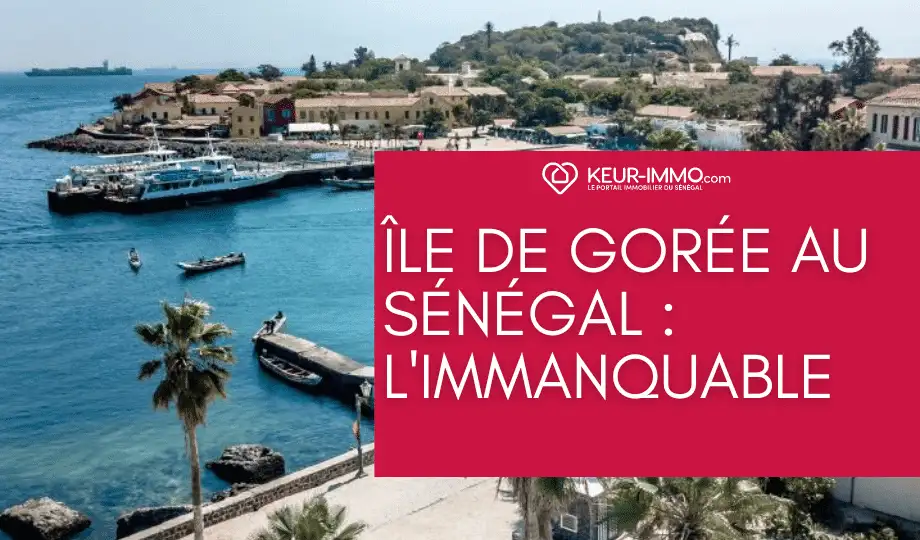

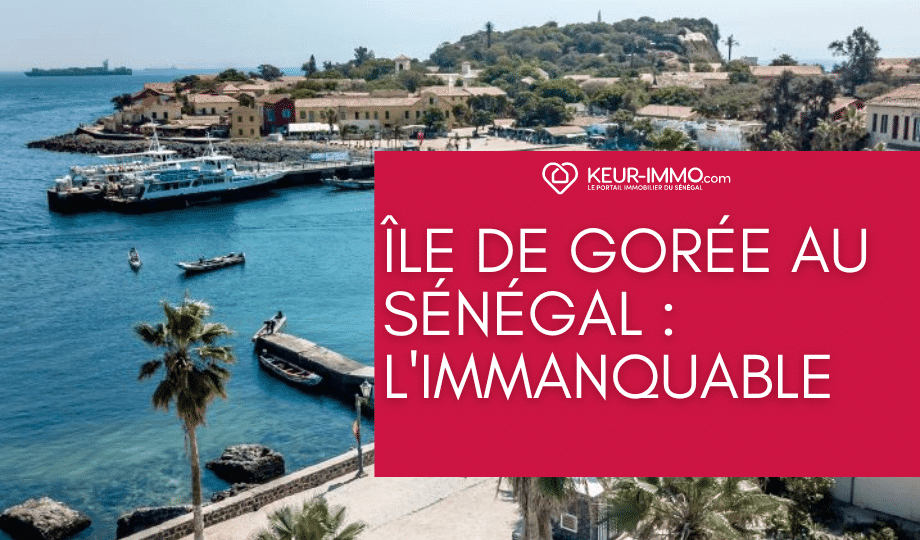
Gorée Island in Senegal is a symbolic and unmissable place. Located off the coast of the Senegalese capital, Dakar , about twenty minutes by boat in the Atlantic Ocean, the island is one of the historical strongholds of the slave trade in Africa . The scars of this history are felt everywhere on the island. Its monuments, architecture, and atmosphere instantly immerse us in its colonial past, where the slave trade represented the fundamental pillar of the island's economy. Gorée holds great historical and cultural importance. This is why it was one of the first sites to be designated a UNESCO World Heritage Site , in 1978.
Although part of Dakar, it seems to exist in another world, creating a stark contrast with the hustle and bustle of the capital. Gorée attracts many tourists who get lost in its colorful streets .
In this article, we'll explore this extraordinary and timeless place, renowned worldwide. Between its historical and cultural heritage on one hand, and its tourism and daily life on the other, you'll learn everything about Gorée Island in Senegal, an essential stop on your trip to the Land of Teranga .
History of Gorée Island in Senegal
Origins of Gorée Island
Gorée Island is located 3.5 kilometers from the Cap Vert peninsula . It is actually of volcanic origin, as its composition is primarily solid lava. Its 28 hectares harbor a rich biodiversity, now threatened by erosion and mass tourism. But we'll come back to that later.

Gorée Island was discovered by the Portuguese in 1444. Administrative documents from the time reveal that the island was named " Palma " by Commander Dinis Dias . The local population, however, called it " Ber ".
Historically, the island's current name was given by Dutch sailors who christened it " Goede reede " (literally translated as "Good roadstead") when they took control of it in 1588. Over time, it was renamed "Gorée".
It was Louis XIV who confiscated it in 1677 thanks to Vice-Admiral d'Estrées. In 1785, the governor at the time, De Boufflers, being enamored of Gorée Island, had his residential quarters transferred there ( Fort d'Estrées ).
Long a spectator to conflicts between the English and French over its occupation, Gorée definitively came under French rule in 1817 until Senegal's decolonization in 1960. It is also worth noting that, along with Saint-Louis , Gorée was the first city in West Africa built on the Western model. The architecture of the buildings, still intact today, leaves no doubt as to the European occupation of the island.
Gorée Island during the slave trade
Gorée Island in Senegal is world-renowned for its history inextricably linked to slavery . This slave trade flourished on the island from the 15th to the 19th centuries, making Gorée one of the most important centers of this commerce , at least symbolically. Indeed, the nerve center of the Senegambia was primarily located in Saint-Louis, the epicenter of the triangular market between Africa, Europe, and the Americas.
Nevertheless, Gorée Island was the site of a very significant human trafficking operation. The exact number of Africans deported from Gorée by slave traders during this period is unknown, although many historians accept the figure of 30,000. This represents approximately 10% of the total slave trade in Senegambia. The majority of these Africans were Serer and Wolof people .

Slaves from across the region were captured and imprisoned in the island's slave quarters. While awaiting deportation to America, they were often forced to perform extremely arduous tasks for the elite. However, some captives, particularly women, were not destined to be taken far from their roots. They remained and became domestic workers.
Gorée Island also has the unique characteristic of having seen the establishment of a mixed society between locals and French. The signares , Black or mixed-race wives of Frenchmen, played a leading role in the slave trade as they were the slave owners. Among others, like Anna Colas Pépin , the peanut trade in Senegal from Rufisque , shortly before the end of slavery.
Abolition of slavery
In the aftermath of the abolition of slavery in 1848 , Gorée Island, until then at the heart of the triangular trade, entered a period of economic, social, and health difficulties. Indeed, the transatlantic slave trade, which had been the island's primary activity, led to a decline. Furthermore, overpopulation prompted the authorities of the time to relocate economic and decision-making activities to the Plateau district in 1857. This marked the beginning of Dakar and its first colonial buildings, which still stand today.
Little by little, Gorée Island lost its splendor, but also its population. It was progressively administratively separated from the rest of Dakar. Once a West African capital, it became a fallen island.

The island's revival began in the 1970s, when Gorée regained some of its former splendor with the restoration of many historic buildings. Furthermore, its designation as a UNESCO World Heritage Site in 1978 (earning it the title of " Memory Island ") significantly boosted its tourist . It increasingly became an essential stop for all types of visitors to Senegal!
Visit to Gorée Island
Main sites to visit
- The House of Slaves : This is the essential and deeply moving part of the visit. Its vibrant colors and architecture create a striking contrast when one considers the building's function at the time. This typically colonial house has two levels. The colonists traded on the upper floor, while the ground floor consisted of cells. These cells held slaves according to their characteristics before they were sent to their buyers via a slave ship bound for ports in America or Europe. Thus, it is with a certain shock and an almost immediate realization of the horror of the era that one discovers the various cells for men, women, girls, children, the recalcitrant, or the unfit. The Door of No Return opens onto the horizon of the Atlantic Ocean . It symbolized the final journey for the slaves of the house, far from their homes. The impact and the emotion are immense.
- Statue of the Liberation of Slaves : It is located right next to the House of Slaves . It depicts two Africans, now freed from their chains, embracing with their arms outstretched towards the sky. The slave is now a free man .

- Fort d'Estrées : Located at the northernmost tip of Gorée Island, it was built by the French in 1856. It was a rather unremarkable citadel. Today, the fort houses the Historical Museum of Senegal. Inside, it contains 500 artifacts spread across 12 rooms, presenting the history of Senegal from the Paleolithic era to the present day. The themes covered include prehistory, the great dynasties and kingdoms of the Middle Ages, the slave trade, resistance movements, Islam, and the more recent events of colonization and decolonization.

- A stroll through the streets of Gorée : Despite the island's tragic past, its streets offer an invitation to tranquility and peace. There are no cars on Gorée Island; everyone gets around on foot. The small, flower-filled streets and colorful colonial-era buildings create a striking contrast with Dakar.

- But also: The Church of Saint Charles Borrome, the Castel Memorial, the Henriette-Bathily Women's Museum, the Gorée Mosque, the Governor's Palace, the Navaronnes Canon or the Buccaneers' Quay.
An essential visit for understanding Gorée Island
You have to visit the island to truly grasp the historical weight of Gorée Island in Senegal. Indeed, it perfectly embodies the slave trade that spread throughout West Africa for centuries. Although it wasn't the "major" player in the Atlantic slave trade , it contains highly representative symbols of an entire era that remind us of unspeakable horror.
Since the 1970s, it has become a major destination for memorial tourism . The aforementioned buildings are open to the public. Guides conduct tours, providing a wealth of historical information. Gorée reminds us, with every street, every building, and every inscription, that this era is not so distant. A visit to the House of Slaves is a truly shocking experience when one pauses for a moment before its tiny cells.
Gorée Island is an invitation to reflect on humanity, without blinders or pretense. It is a memorial to Human Rights and one of the cradles of forgiveness.
The importance of tourism in the local economy
has a population of 1,300 today. Once dominated by fishing, its current economy is primarily based on tourism. For the past fifty years, it has been one of the driving forces behind Senegal's tourist appeal.
The island has capitalized on its history and cultural heritage to attract visitors from all over the world and become a highly symbolic place. It is also very common for prominent figures from around the globe to stop there.
For the locals, the massive influx of tourists has created a number of income-generating activities. Restaurants and hotels welcome tourists for a meal or an overnight stay. Vendors goods offer their wares in open-air shops. People offer their services to help you explore the island, showing you its key locations and providing practical information.
Practical tips for visiting Gorée Island
How do I get there?
You can reach the island via the Gorée ferries , a 20-minute journey on the Dakar-Gorée Maritime Link (LMDG) . You can board directly at the Port of Dakar . The shuttle runs 12 times a day (round trip) and there's no need to book in advance as you can buy tickets on site. The timetable is below:

Here are the round-trip fares in CFA francs :

Where to eat and stay?
You'll find many small, unique restaurants in Gorée where you can eat local specialties. Here are a few:
- At Poulot's
- Saint-Germain
- At Thio's
- At Uncle's
- At Kiki's
- The Fassy
- The Buccaneer
- …

Furthermore, if you wish to stay for several days, charming small hotels and guesthouses welcome you for an overnight stay on Gorée Island in Senegal. It's also an opportunity to witness magnificent sunrises and sunsets on the beach. You'll experience truly authentic moments with family or friends. Here is a short list of accommodation options you can find there:
- Augustin Ly House
- The Sailor's House
- At Eric's
- At Coumbas's
- Madou Gorée Hotel
- Municipal Hotel the Gate of Return
- …

Cultural activities and events in Gorée
Gorée Island cultural events throughout the year that are well worth a visit. Among them:
- Gorée Cinema : This festival aims to promote African cinema . Films are screened on the island's beach, right next to the pier. Locals and tourists alike enjoy classic films and modern productions on a large screen, illuminating this nighttime event. Don't hesitate to go; you'll have a great time! Visit the website .

- Regards sur Cours : Every other year, Regards sur Cours organizes an exclusive artistic stroll on Gorée Island. During the long Pentecost weekend, visitors can enter the colorful houses, patios, and fragrant gardens that open their doors to them. In addition to the remarkable architecture of the colonial homes, tourists and Dakar residents alike have the opportunity to discover exhibitions by local artists installed in the interior spaces. This unique occasion allows for a rediscovery of the historic island and an appreciation of the artworks on display with fresh eyes.

- Dakar-Gorée Crossing : This is a swimming race linking the capital with the island. It's an event open to everyone, where swimmers reach the beach at Gorée.

- Gorée Diaspora Festival : This is another major event on Gorée Island. Focused on solidarity between African peoples and their diasporas around the world, the event attracts many artists and personalities from all walks of life each year.

And so ends our escape to Gorée Island in Senegal. A true temple of reconciliation and human rights , it is one of the most emotionally charged places in Senegal. It invites us to humble reflection on history and all facets of humanity. For that alone, it's worth the trip!
Erosion and the fragility of the buildings threaten the island's long-term viability. A first movement to preserve Gorée emerged in 2016, with the release of several foreign funds to finance essential work to ensure the site's survival.
Recently, UNESCO announced its intention to prioritize the restoration of the island's historic buildings , as some are at risk of collapse in the near future if left unrestored. In 2023 , a team of experts will be sent to Senegal to thoroughly assess the needs in close collaboration with the Senegalese authorities. Based on the findings of this mission, UNESCO will work with Senegal to implement new conservation measures. The organization will also support the country in its efforts to secure funding from the international community.
Visit KEUR-IMMO.com .