

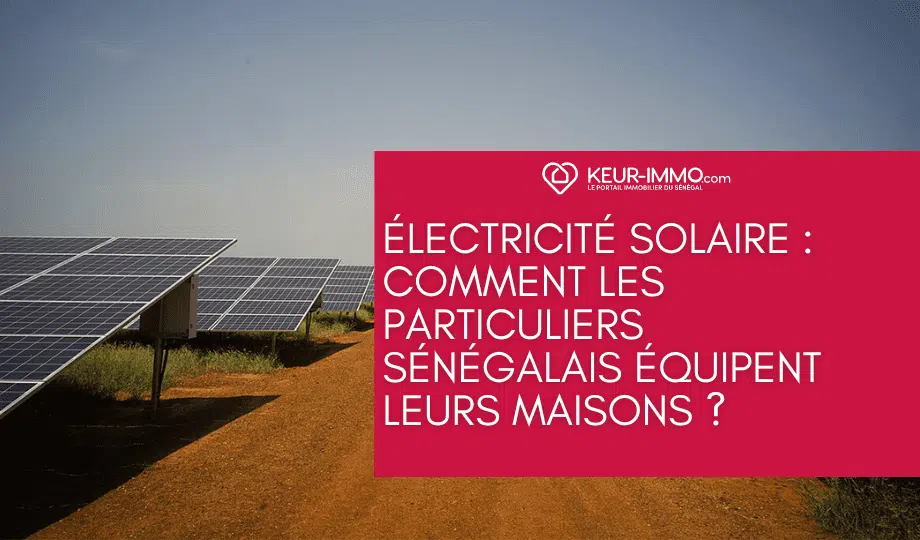

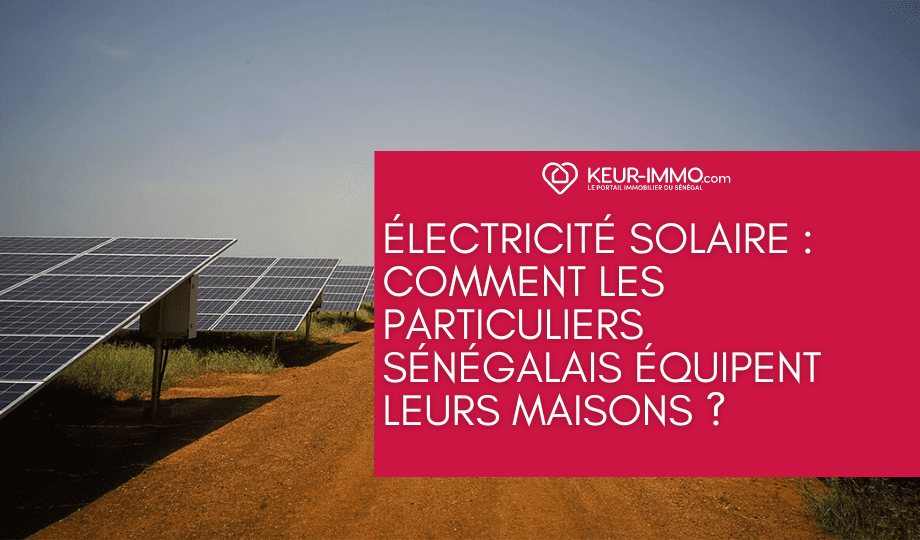
Faced with steadily rising electricity prices in Senegal, individuals are seeking cost-effective alternatives to meet their energy needs. At the same time, the country, known for its hospitality, enjoys 1,600 hours of sunshine annually. It is therefore natural that the population is turning to photovoltaic panels and various other solar energy systems. In the following sections, discover in detail how Senegalese people are using this eco-friendly solution in their daily lives.
Individual kits are popular in Senegal

In rural areas of Senegal, only one in three households has access to electricity via the public grid. In this context, individuals are increasingly equipping themselves with individual solar kits. This is a photovoltaic system that allows households to be powered by renewable energy, generally with a direct current (DC) output of 12 W.
Besides the promise of energy independence, individual kits allow Senegalese people to participate in the country's ecological transition. However, they only cover moderately high energy bills. Individuals use this basic system to:
- recharge their smartphones,
- to operate their television,
- to enjoy their fan without any interruption.
In other words, the individual solar kit is the preferred equipment for populations residing in regions where access to electricity is severely limited.
Solar water heater for enjoying hot water
While solar electricity is increasingly becoming part of everyday life in Senegal, two devices stand out in particular: the pressurized solar water heater and the gravity solar water heater.
The first option is gaining popularity in many Senegalese homes due to its high resistance to corrosion, but especially because of the large quantities of hot water it provides. This durable system operates using thermosiphon. This energy transfer mechanism, which uses temperature sensors, ensures even distribution of pressurized solar hot water throughout the entire house.
A controller allows the water temperature to be adjusted according to the owners' needs. Furthermore, a single pressurized solar water heater is sufficient to meet the needs of a family of four.
The non-pressurized water heater, on the other hand, uses airless ducted collectors, which ensures excellent heat circulation while minimizing thermal energy loss. This increased capacity translates into an average production 20 to 30% higher than that of flat-plate collectors.
The unpressurized solar hot water distribution system is similar to its counterpart. However, this system includes a float to prevent the water heater from overheating. Furthermore, it ensures a gradual transfer of heat, resulting in greater long-term savings.
The non-pressurized water heater is designed to meet the needs of a 3-person household, although its actual capacity may be suitable for a family of 4.
The panel and regulator for storing solar energy

Individuals in Senegal don't always limit themselves to basic kits to meet their needs. Some households opt for a high-end system to increase their energy independence. This system consists of solar panels and regulators.
High-quality photovoltaic panels are based on semi-cut cell technology. This promotes better electrical energy production at a lower hot spot, resulting in greater efficiency in shady conditions.
The solar panel junction boxes for TVs are separate, and the cable lengths are customizable. This makes it much easier to take advantage of Senegal's abundant sunshine.
The solar charge controller, for its part, converts the energy generated by the solar panels for storage in batteries. Most Senegalese consumers choose a controller equipped with a screen for easier configuration. It typically offers several USB ports, allowing users to connect everyday electronic devices.
Other individuals prefer to install a solar inverter, especially if they have small photovoltaic systems. Its role? To convert the solar energy from the panels into alternating current (for household use). Furthermore, it's possible to connect a tablet, smartphone, or computer to monitor the solar installation.
Selling or self-consumption of photovoltaic energy: the choice of Senegalese people
Initially, selling the energy produced by the photovoltaic system was the priority for individuals. Indeed, self-consumption rarely exceeded 30% of the energy produced. Thus, the surplus energy was lost, as solar panels do not allow for its storage.
The private installation was therefore connected to the public grid via a production meter, and the supplier paid the individual for this service. The energy produced could also be deducted from the electricity bill, hence the advantage of selling it back to the grid.
However, the trend is now towards self-consumption, particularly due to the country's stated commitment to initiating an energy transition. Individuals increasingly want to use the energy they produce solely for their own needs.
For true self-sufficiency, the question of energy storage naturally arises. A growing number of Senegalese individuals are investing in high-end batteries. These photovoltaic storage units offer the prospect of genuine independence, but their installation cost remains a barrier to their widespread adoption.
Ultimately, individuals in Senegal are embracing solar electricity by equipping themselves with individual kits, solar water heaters, regulators, and batteries. The path to a future ecological transition is already being paved.
Visit Keur-Immo .