


Ivory Coast , a West African country, is experiencing sustained economic and demographic growth. It's therefore not surprising that the demand for real estate is constantly increasing. If you're planning to build a house in Ivory Coast in 2025 , it's essential to fully understand the different stages, costs, and local specificities. In this article, we offer a comprehensive guide to successfully building your house in Ivory Coast, taking into account the economic, technical, and practical aspects, so you have all the information you need to realize your dream home. Happy reading! 🏠

For you: All land listings for sale in Ivory Coast.
Choosing the right plot of land for your house 📍
The first step in building a house in Ivory Coast is finding the ideal plot of land. Here are some factors to consider during your search:
- Location 📍 : Depending on whether you wish to build in the city or the countryside, land prices and characteristics will vary. The most sought-after areas are Abidjan , the capital, but also San Pédro , Grand-Bassam , Yopougon , Grand-Bereby , etc…
- Land area 📏: The size of the plot will influence the price, but also the building possibilities. Remember to check local planning regulations and any easements that may apply to your land.
- Access to services 🏢 : Water, electricity, and communication networks are essential elements to consider. Ensure that your land is well-served by these services and that it is serviced (or that service is possible).
Understanding construction costs 🪙

The cost of building a house in Ivory Coast depends on many factors , such as the size, the materials used, the type of construction, and the desired level of finish. On average, prices range from 300,000 to 500,000 FCFA per square meter . Here is a non-exhaustive list of elements that influence the cost of construction:
- Materials 🧱 : Local materials, such as terracotta, cement, or brick, are generally less expensive than imported materials. However, the choice of materials will depend on your requirements for quality, durability, and aesthetics.
- Labor costs 👷🏾 : Labor costs vary depending on the region and the skill level of the tradespeople. It's important to ensure you're working with competent and reliable professionals.
- Administrative costs 🗒️ : Building a house requires obtaining various permits, such as a building permit , a planning certificate , and a certificate of conformity . These procedures can incur additional costs.
Choosing an architectural style for building your house in Ivory Coast 🏠
Ivory Coast offers a wide diversity of architectural styles, influenced by the country's history, culture, and climate. While a mix of styles is very common in Ivory Coast, it can be divided into two distinct inspirations, which can be adapted to your tastes and preferences:
- The traditional style : It draws inspiration from local houses, built with natural materials such as terracotta, wood, or straw. This style is well-suited to the hot, dry climate of Ivory Coast, offering natural insulation and good ventilation.

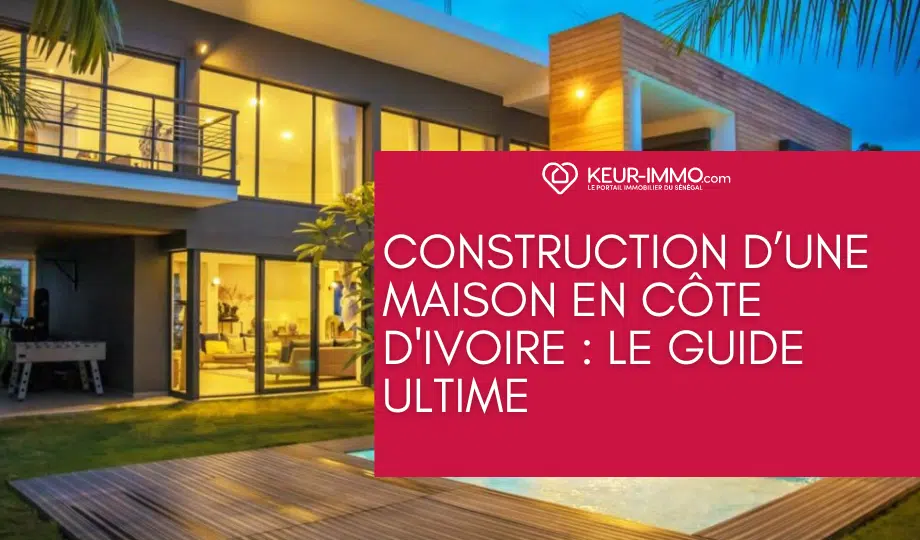
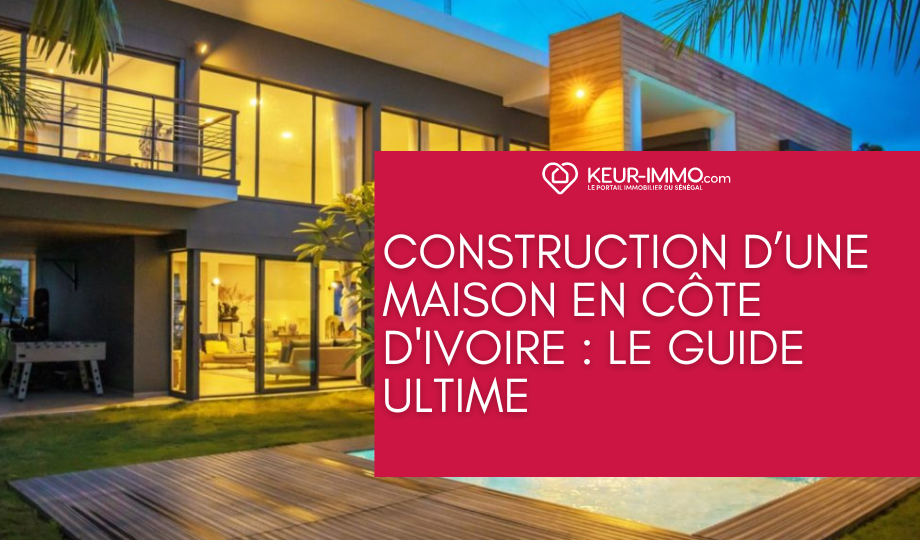
- Modern style : This style is characterized by clean lines, large glazed surfaces, and flat roofs. It allows for the enjoyment of natural light and the creation of open and airy living spaces.
Working with competent professionals ✅
To ensure the success of your construction project in Ivory Coast, it is essential to work with competent and reliable professionals in various fields. An architect is the first expert to consult to design your house, taking into account your needs and budget, as well as the site constraints. They will also guide you through the administrative procedures and monitor the construction site. We strongly advise you to use their services. ✅
The project manager plays a crucial role in coordinating the work and ensuring adherence to deadlines, budget, and construction quality. If you have experience in the field or are comfortable with the construction industry, this is a role you can take on. However, it requires significant time and energy to oversee all the different trades.

Finally, tradespeople such as masons, plumbers, and electricians will be key to the quality and durability of your home in Ivory Coast. To select the right professionals, don't hesitate to consult reviews from previous clients, ask for references, and compare several quotes.
The stages of building your house in Senegal 📋
Building a house in Ivory Coast involves several key stages, which must be carefully planned and coordinated:
- Site preparation 🌳 : This step involves delimiting the land, carrying out earthworks and installing the networks (water, electricity, etc.).
- Foundations 🏗️ : They ensure the stability of the house and distribute the loads onto the ground. The types of foundations vary depending on the soil and the site's constraints.
- Wall construction 🧱 : The walls are built according to the architect's plans and local regulations. The most commonly used materials are brick, concrete block, and concrete.
- Roofing 🛆 : The installation of the roof depends on the architectural style chosen and the materials used (tiles, sheets, thatch, etc.).
- Finishing work 🛀 : This stage includes insulation, plumbing, electrical work, carpentry, and interior and exterior finishes. It is crucial to ensure the comfort, safety, and aesthetics of your home.
- Exterior finishing and landscaping 🏡 : Finishing includes painting, flooring, and decorative elements. Exterior landscaping includes the construction of fences, walkways, patios, and green spaces.
- Acceptance of works and guarantees ✅ : At the end of the project, you will conduct a site visit with the project manager to verify that the work has been completed to your satisfaction. Don't forget to request the legal guarantees, such as the ten-year structural warranty and the guarantee of perfect completion .
Comply with local standards and regulations ✅

In Senegal, building a house must comply with several local regulations and standards to ensure the quality, safety, and durability of the buildings. Adherence to the Urban Planning Code and the Building Code is essential, as they establish the urban planning rules and technical standards applicable to your land. Furthermore, Local Urban Development Plans ( PLUs ) specify the rules specific to each municipality, which may impose additional constraints regarding architectural style, materials, or location.
Furthermore, although Côte d'Ivoire is located in a low-seismic zone, it is important to comply with earthquake-resistant and cyclone-resistant building codes to ensure the resilience of structures against earthquakes. Finally, environmental standards play a crucial role in reducing the ecological impact of buildings, addressing aspects such as energy consumption, waste management, and the preservation of natural resources.
In order to comply with all these regulations, it is essential to work closely with your architect and your project manager throughout the process of building your house in Ivory Coast.
This concludes our practical guide. To successfully complete your project of building your house in Ivory Coast by 2025, it is essential to pay close attention to every stage of the project. The success of your undertaking will also depend on the skills and reliability of the professionals you choose.
Visit KEUR-IMMO CÔTE D'IVOIRE